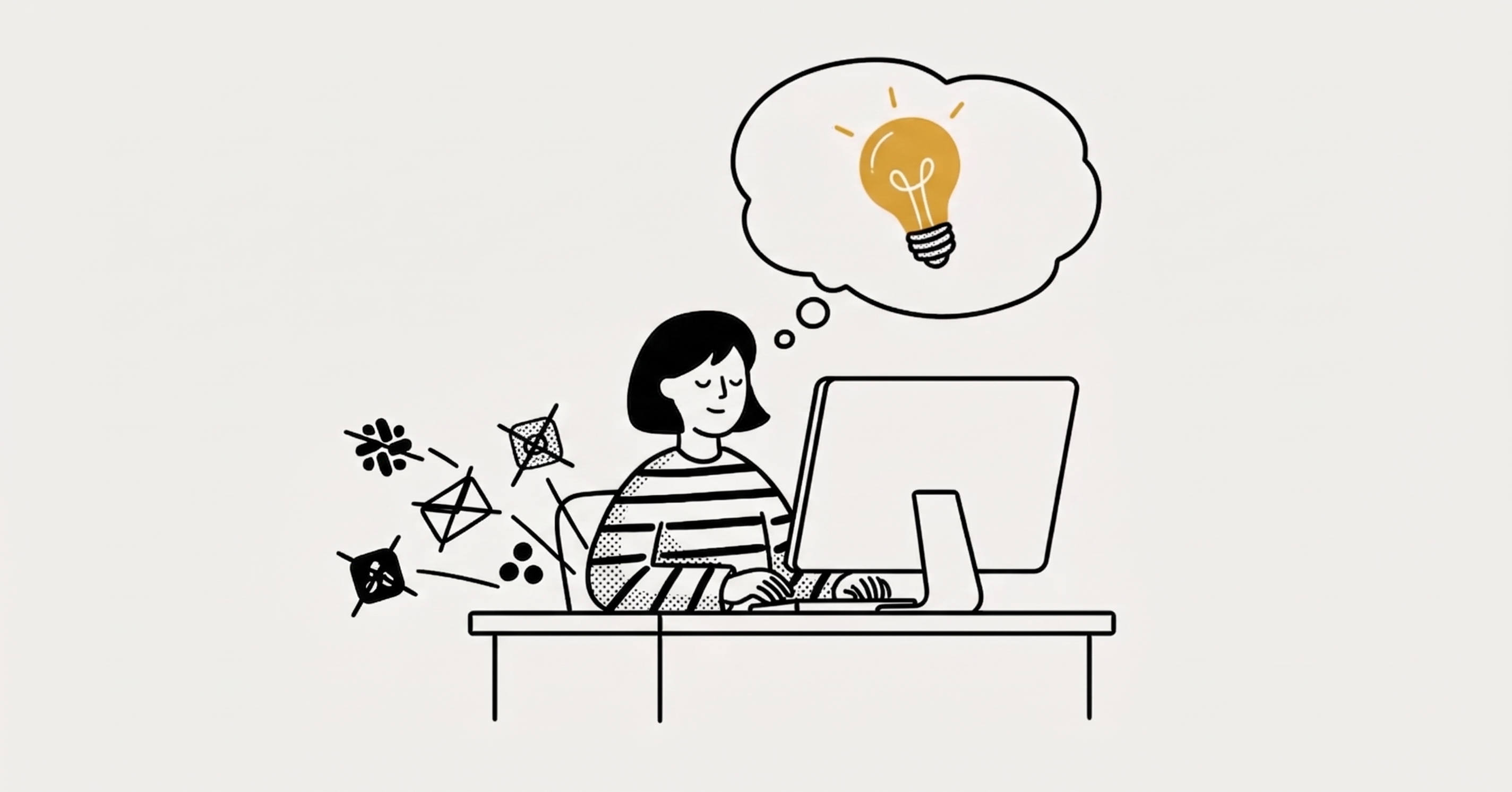
I work across Slack, Gmail, Asana and a project management tool I will not name. I had 23 apps sending me notifications on a good day. On a bad day, more. Two weeks ago I muted every single one of them. Not turned down. Not set to priority only. Muted. What happened next was not what I expected.
Why I decided to mute everything
It started with a bad Tuesday. I had four deliverables due, a one-on-one with my manager, and somewhere between 8am and noon I had done none of them. I had been busy every single minute. I had just not done any of the work I was supposed to do.
I counted my context switches that afternoon out of frustration. Fourteen times between 8am and noon I had switched from what I was doing to a notification. Not because someone needed something urgent. Because the notification was there and my brain interpreted it as something that needed a response.
The decision was part experiment, part rage-quit against my own habits. I turned off every notification. Slack, Gmail, Asana, the project tool, calendar alerts, everything. The only thing that could still reach me was a phone call, which nobody in my industry ever makes.
How notification-dependent are you?
Before I get into what happened, take the quiz below. It will tell you whether your situation is similar to where I was or whether you are already managing this well.
Week one: the anxiety nobody warns you about
The first three days were genuinely uncomfortable. Not because I missed anything important. Because the absence of the signal felt wrong.
I did not realize until the notifications were gone how much of my baseline sense of being on top of things came from them. Every ping was a tiny reassurance that I was plugged in, that people could reach me, that I was part of what was happening. When the pings stopped, that reassurance stopped with them.
By day three I was manually checking Slack every 25 minutes or so. The notifications were off but the behaviour was still there. I was generating my own interruptions because I had not fixed the underlying habit, just removed the external trigger.
of all interruptions at work are self-initiated. You interrupt yourself more than your tools interrupt you. Muting notifications removes the external trigger but not the habit.Source: Gloria Mark, UC Irvine interruption research
This is the thing nobody tells you about a notification detox. The notifications are not really the problem. They are the most visible symptom. The problem is the checking habit that forms around them, and that habit runs deeper than the notifications themselves.
By the end of week one I had mostly stopped the manual checking. Mostly. I was still peeking at Slack around lunchtime and again mid-afternoon, but I was doing it intentionally rather than reactively. That distinction turned out to matter more than I expected.
Week two: something shifted
Week two felt different. The anxiety was gone. In its place was something I had not felt in probably two years: a morning that went exactly as I planned.
I would sit down, decide what I was working on, work on it, and finish it. Then decide what came next. The sequence sounds obvious. It is not obvious when you are used to letting notifications decide the sequence for you.
I also noticed I was better in meetings. I am usually half-present in any meeting because my brain is half-monitoring what is coming in on Slack. With nothing coming in, I was actually there. People noticed. Two colleagues independently mentioned I seemed more engaged this week than usual.
The work I was most worried about was anything that required quick turnaround. I had assumed that without notifications I would miss time-sensitive requests and look unresponsive. What actually happened: I checked my three main channels at 8am, noon, and 4pm. Almost nothing that arrived needed a response in under four hours. The things that did were genuinely urgent and people found other ways to reach me.
What I actually learned
After two weeks, three things were clear.
First, almost nothing that comes through a notification is as urgent as the notification makes it feel. The urgency is a design choice by the app. It is not a property of the message itself.
Second, the checking habit is more powerful than the notifications. I had to intentionally build the batched-checking behaviour to replace the reactive one. Muting helped, but it was not sufficient on its own.
Third, the real cost of constant notifications is not the time spent reading them. It is the mental load of monitoring for them. That load is invisible until you remove it. When it is gone, you realize how much of your cognitive capacity it was occupying.
What I use now is different from the full mute. I check Slack, Gmail and Asana at set times. Everything else runs through Notico, which shows me a unified feed of what is actually important across all three without making me open each one. I get the benefit of the mute without the manual checking. The anxiety does not come back because I have a single view that tells me if anything genuinely needs me before I open anything.
Notico reads your Slack, Gmail and Asana together.
AI prioritisation shows you what actually needs your attention so you can stop the checking habit without missing what matters. Free during early access.
Join the waitlist freeIf you have been thinking about doing this: do it. Mute everything for three days. Not a week, not two weeks. Three days. The first day will feel uncomfortable. The second day will feel strange. The third day you will understand what your brain has been carrying this whole time.
Sources: Asana State of Work (2023); Gloria Mark, University of California Irvine, research on self-interruption and focus recovery; American Psychological Association, "Multitasking: Switching costs" (2006); UC Irvine interruption and recovery research.